

Howdy, focused audience! You’ve reached the blog for the Royal Dental Hospital. Today, we address a common concern among teenagers: broken front teeth. If you’re a 15-year-old with this issue, you’ve come to the right place. We understand the importance of having a confident smile, especially during your teenage years. In this article, we will explore if broken front teeth will grow back and shed light on teeth anatomy by Dr. Chirag Chamria, an esteemed dentist at Royal Dental Clinics, who specializes in restoring beautiful smiles. So, let’s dive in!
Who is this article for?
This article is for teenagers and parents who are worried after a front tooth has broken due to a fall, sports injury, accident, fight, or biting something hard. It is especially useful for a 15-year-old patient who wants to know whether a broken front permanent tooth will grow back naturally. The simple answer is: if it is a permanent tooth, it will not grow back on its own.
Understand Anatomy of Your Front and Back Teeth
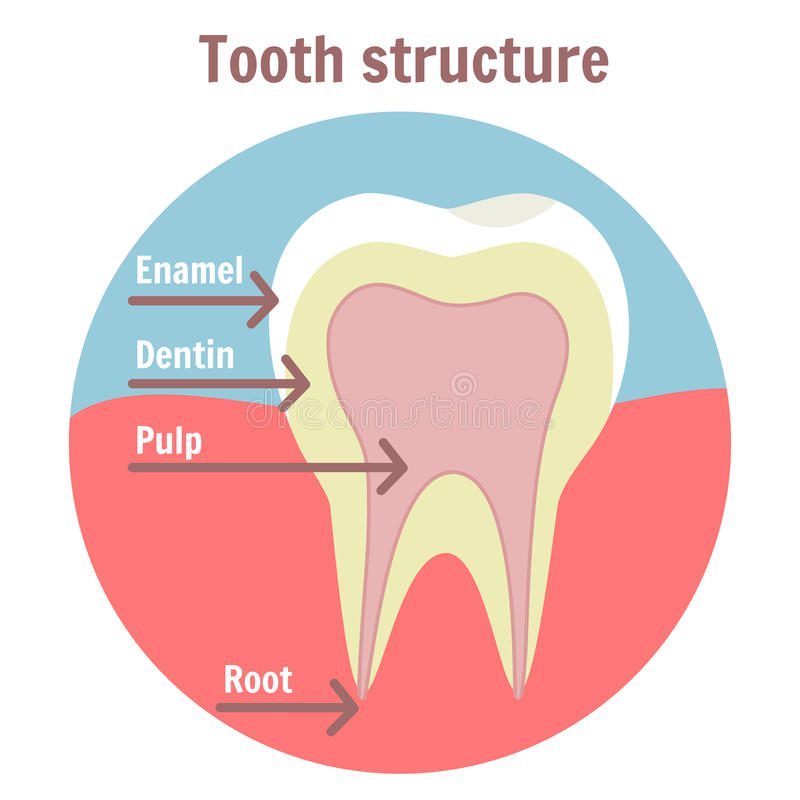
To understand the possibilities of your broken front teeth growing back, it’s essential to delve into the anatomy of your teeth. Teeth have a complex structure, consisting of various layers and components that contribute to their function and appearance.
- Enamel: The outermost layer of your teeth is called enamel. It is the hardest substance in your body and serves as a protective shield for the underlying layers. Enamel is responsible for giving your teeth their white and shiny appearance.
- Dentin: Beneath the enamel lies the dentin, a calcified tissue that forms the bulk of the tooth structure. Dentin is not as hard as enamel but still provides strength and support to the tooth.
- Pulp: The pulp is the innermost part of the tooth, consisting of blood vessels, nerves, and connective tissue. It plays a crucial role during tooth development but can become sensitive and painful if exposed due to trauma or decay.
- Cementum: The roots of your teeth are covered by a layer called cementum, which helps anchor the tooth to the jawbone through the periodontal ligament. This ligament acts as a cushion and allows slight movement of the tooth during biting and chewing.
- Gums: Also known as gingiva, your gums surround and protect the base of your teeth. Healthy gums provide a tight seal around the teeth, preventing bacteria from entering the tooth roots.
Primary Teeth vs. Permanent Teeth Anatomy
Primary teeth typically begin to erupt between the ages of six months and one year, and they continue to emerge until around the age of three. These teeth play a vital role in a child’s oral development and serve several functions:
- Speech Development: Primary teeth help in the proper pronunciation of words and sounds during the early stages of speech development.
- Chewing and Nutrition: They allow children to chew their food effectively, aiding in proper digestion and ensuring adequate nutrition.
- Guidance for Permanent Teeth: Primary teeth act as placeholders for the eruption of permanent teeth. They maintain the space necessary for the proper alignment and positioning of the permanent dentition.
However, primary teeth are not meant to last a lifetime. As children grow, these teeth naturally loosen and eventually fall out to make way for permanent teeth.
Permanent teeth, as the name suggests, are intended to last throughout your adult life. They begin to erupt around the age of six and continue to emerge until early adulthood. Permanent teeth consist of several types:
- Incisors: The four front teeth (two on the upper jaw and two on the lower jaw) are known as incisors. They are responsible for biting and cutting food.
- Canines: The next teeth on either side of the incisors are the canines. These teeth have a pointed shape and help tear and shred food.
- Premolars and Molars: Behind the canines are the premolars and molars. These teeth have flat surfaces designed for chewing and grinding food.
Unlike primary teeth, permanent teeth do not have natural replacements waiting to take their place. Therefore, if you have broken a permanent front tooth, it will not grow back on its own. Understanding the distinction between primary and permanent teeth is crucial because it influences the approach to treating broken front teeth. If you, as a 15-year-old, have broken your permanent front teeth, seeking professional dental care becomes essential to restore your smile and maintain proper oral health.
Will a broken front tooth grow back at 15?
No. At 15 years of age, the front teeth are usually permanent teeth. If a permanent front tooth breaks, the broken part does not naturally grow back. However, the tooth can often be restored with dental treatment. The dentist must first check how deep the fracture is and whether the nerve, root, or supporting bone is involved.
What should parents do immediately?
Stay calm and check whether the tooth is chipped, broken, loose, displaced, or completely knocked out. Rinse the mouth gently with clean water. If there is bleeding, apply light pressure with clean gauze. Save the broken fragment if available. Avoid chewing from that side and visit a dentist as soon as possible. If the tooth is knocked out completely, urgent dental care is needed.
Why front tooth trauma should not be ignored
A broken front tooth may look like only a cosmetic problem, but it can involve enamel, dentin, nerve, root, or bone. Sometimes pain appears later. Delay can increase the risk of infection, colour change, sensitivity, swelling, or need for more complex treatment. Early treatment improves the chances of saving the natural tooth and restoring the smile.
Treatment options for a broken front tooth in a teenager
Treatment depends on the fracture. A small chip may need polishing or bonding. A larger break may need composite build-up, veneer, or crown. If the nerve is exposed, root canal treatment may be needed. If the root is fractured or the tooth cannot be saved, replacement options may be discussed, but in teenagers growth and jaw development must be considered carefully before planning implants.
Can bonding repair a broken front tooth?
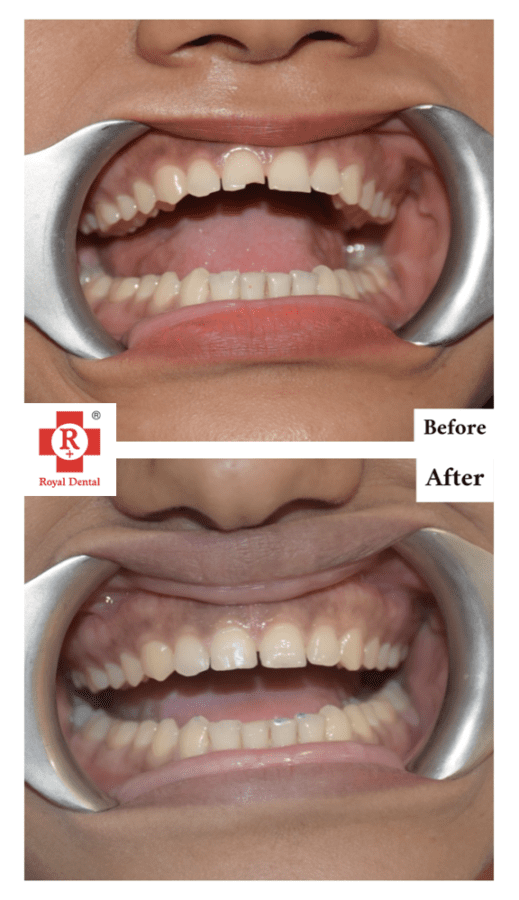
Yes. Dental bonding is often used for broken front teeth when the fracture is limited and the tooth is otherwise healthy. Tooth-coloured material is shaped to recreate the missing portion. Bonding is conservative and useful in young patients, but it may need polishing, repair, or replacement over time.
When is root canal needed for a broken front tooth?
Root canal may be needed if the fracture exposes the nerve, if the tooth becomes painful, if there is infection, or if the tooth changes colour after trauma. After root canal treatment, the tooth may need bonding, veneer, or crown depending on the remaining tooth structure.
Should a 15-year-old get a dental implant for a broken front tooth?
Dental implants are usually planned carefully in growing patients because jaw growth may not be complete at 15. If the tooth cannot be saved, the dentist may first consider temporary or growth-friendly options until the right time for a final replacement. This decision needs specialist evaluation.
Smile and confidence after front tooth injury
A broken front tooth can affect confidence, especially during teenage years. The aim of treatment is not only to repair the tooth but also to restore the child’s smile, speech, comfort, and emotional confidence. Early treatment can make the result simpler and more natural-looking.
Seeking Professional Dental Care
Seeking professional dental care is of utmost importance when dealing with broken front teeth. While the natural regrowth of broken permanent teeth is not possible, a skilled dentist like Dr. Chamria can provide you with the necessary expertise and treatment options to restore your smile. Here’s why professional dental care is crucial: A dentist will thoroughly examine your broken front teeth to assess the extent of the damage. They will use diagnostic tools such as X-rays and physical examinations to determine the best course of action. An accurate diagnosis is essential to develop an effective treatment plan tailored to your specific needs.
Long-Term Oral Health and Maintenance
Long-term oral health and maintenance are vital considerations after restoring broken front teeth. Once you have undergone professional dental care with Dr. Chamria, it is crucial to prioritize ongoing oral hygiene practices and regular dental check-ups. Here’s why long-term oral health and maintenance are essential:
- Brushing: Brush your teeth at least twice a day using a soft-bristled toothbrush and fluoride toothpaste. Pay special attention to the restored front teeth, ensuring that you clean around the edges and surfaces thoroughly
- Flossing: Regular flossing helps remove plaque and food particles from between your teeth and along the gumline. Be gentle but thorough when flossing around your restored front teeth.
- Mouthwash: Consider incorporating an antimicrobial mouthwash into your routine to help reduce bacteria and freshen your breath. Consult with Dr. Chamria to determine the most suitable mouthwash for your specific needs.
- Healthy Diet: Maintain a balanced diet rich in vitamins and minerals. Limit sugary and acidic foods and beverages, as they can contribute to tooth decay and damage.
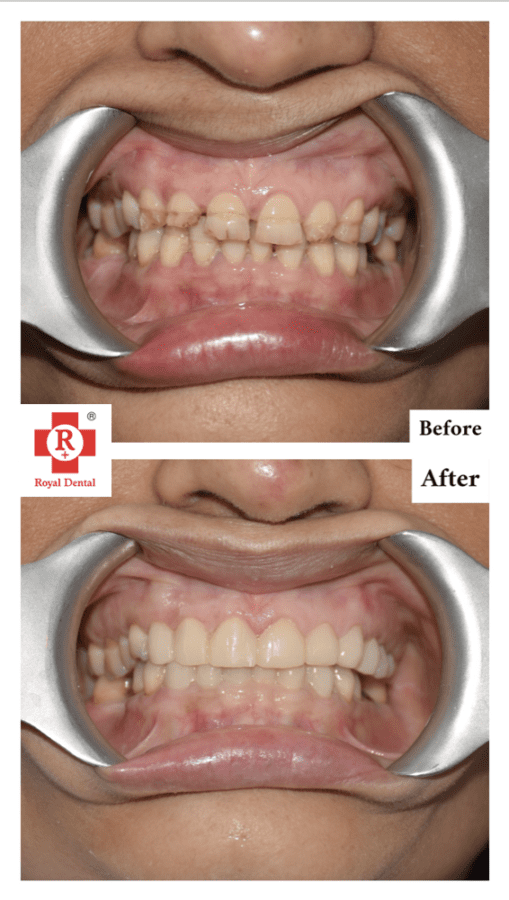

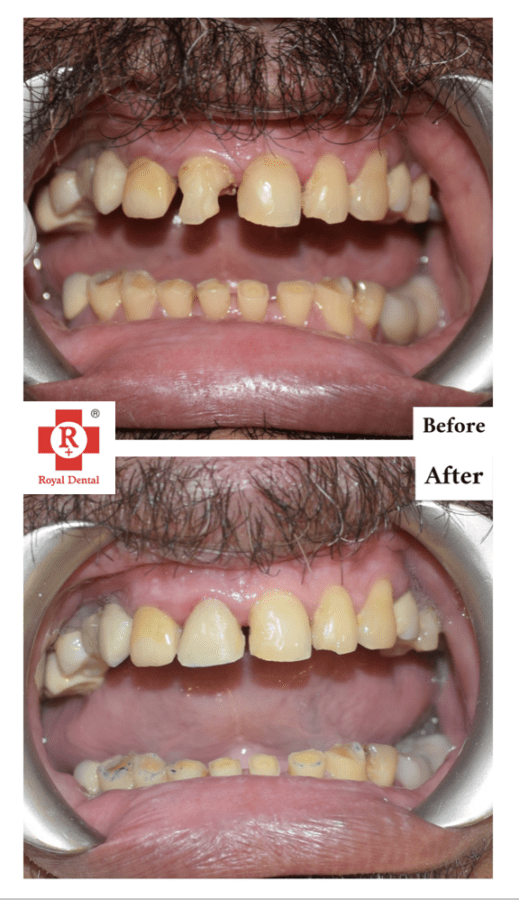
Even with restored front teeth, it is crucial to schedule regular dental check-ups with Dr. Chamria. These appointments allow for ongoing monitoring of your oral health and early detection of any potential issues. During check-ups, your dentist will examine your restored front teeth, conduct cleanings, and address any concerns you may have.
Protective Measures
Mouth guards: If you participate in sports or activities that carry a risk of dental injury, wearing a custom-fitted mouth guard can help protect your restored front teeth from potential trauma.
Night guards: If you have a habit of grinding or clenching your teeth, particularly while sleeping, a nightguard can help protect your teeth from excessive wear and potential damage.
Maintaining open communication with Dr. Chamria and his dental team is crucial. If you experience any discomfort, sensitivity, or changes in your restored front teeth, be sure to schedule a follow-up appointment. Timely communication allows for prompt evaluation and appropriate adjustments or interventions, ensuring the long-term success of your dental restoration.
“A beautiful smile is a reflection of inner happiness, a gateway to confidence, and a universal language that spreads joy wherever it shines.”
Dr. Chirag Chamria
Conclusion
Dear young readers, your broken front teeth may not grow back naturally, but that should not discourage you. Modern dentistry has advanced to the point where broken teeth can be effectively restored, allowing you to regain your beautiful smile. Dr. Chirag Chamria, with his expertise and passion for creating stunning smiles, is here to guide and assist you on your journey to dental restoration. At Royal Dental Clinics, we believe in the power of a confident smile, and we are dedicated to providing exceptional care to our patients. Remember, age is just a number when it comes to achieving a healthy and radiant smile. So, take the first step and schedule a consultation with Dr. Chamria to explore the best treatment options for your broken front teeth.
FAQs
Will my broken front tooth grow back at 15?
No. If it is a permanent tooth, the broken part will not grow back naturally. It can usually be restored with dental treatment.
Can a broken front tooth be fixed with bonding?
Yes, many front tooth chips and fractures can be repaired with tooth-coloured bonding if the damage is not too deep.
What if the nerve is exposed?
If the nerve is exposed, root canal treatment or other pulp treatment may be needed before restoring the tooth.
Can a broken front tooth turn black later?
Yes. A traumatised tooth can change colour if the nerve is damaged. It should be monitored by a dentist.
Should I keep the broken tooth piece?
Yes. If you find the broken fragment, keep it safely and bring it to the dentist. In some cases, it may help in planning or repair.
Can a 15-year-old get a dental implant?
Usually implants are delayed until jaw growth is complete. If a front tooth cannot be saved, temporary or staged options may be considered first.
Is a broken front tooth an emergency?
It can be. Visit a dentist urgently if there is pain, bleeding, looseness, nerve exposure, swelling, or if the tooth is knocked out.
© All rights reserved by Royal Dental Implants Pvt Ltd. Issued in public interest