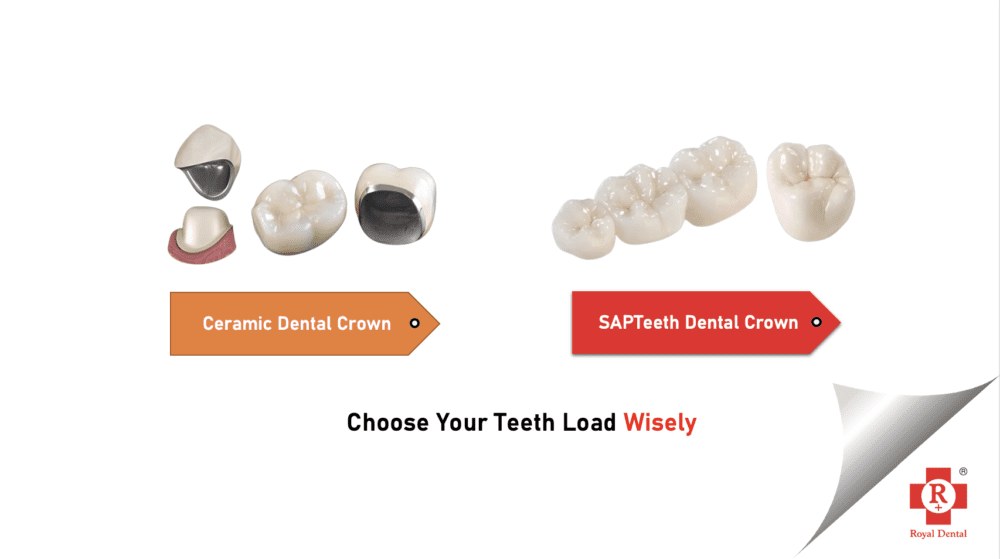
When you think of dental implants, what’s the first thing that comes to mind? If you answered “that movie star with the fake shark teeth” then keep reading. In the past few years, dental implants have increasingly become the go-to solution for replacing missing teeth and correcting jawline irregularities. But what sets these two restorative solutions apart? The answer lies in their material composition. In this blog post, we will be discussing the differences between Ceramic crown vs SAPTeeth and why one option is better for your dental needs.
Ceramic Dental Teeth vs SAPTeeth Crown is an important comparison for patients who need crowns, bridges, implant-supported teeth, or fixed teeth replacement. Ceramic teeth are known for their hardness and appearance, while SAPTeeth are designed as shock-absorbable permanent teeth that may help reduce pressure on implants, bone, gums, and natural teeth.
Who is this Article For?
This article is for patients who need dental crowns, bridges, implant-supported teeth, or missing-tooth replacement and want to compare Ceramic Teeth with SAPTeeth before choosing the right restoration. This blog explains the difference between ceramic crowns and SAPTeeth crowns, including how SAPTeeth are designed as shock-absorbable permanent teeth, while ceramic or zirconia materials are harder and may transfer more pressure to the supporting structures.
What is a Ceramic Dental Crown?
Ceramic teeth used to replace congenitally missing teeth or as part of a dental implant procedure. They used for cases where a dental implant may be too complicated or expensive. Ceramic teeth made from a mixture of natural minerals, synthetic resins and coloring pigments. Ceramic teeth have a porous composition and made in any shape or size for patients. They are then coated in a high-quality enamel finish to closely match the appearance of natural teeth. Ceramic teeth are a great restorative choice as they mimic the strength and feel of natural teeth. They are also very aesthetically pleasing, making them a popular option for tooth replacement.
What is an SAPTeeth Crown?
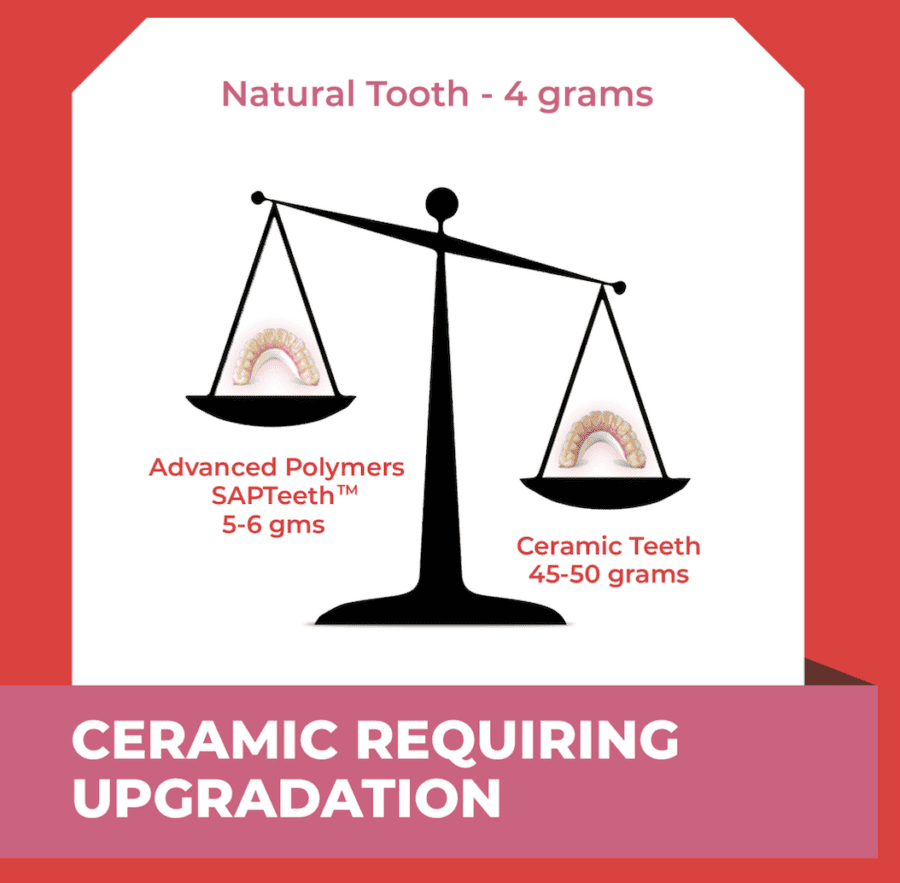
SAP stands for Shock Absorbable Permanent Teeth, but don’t let that long title scare you! SAPTeethTM are a group of highly advanced polymers which are specially made to protect the bone, implant and the natural tooth under it. SAPTeethTM means Shock Absorbable Permanent Teeth. Our natural teeth have a hardness of about 350 mpa to 450 mpa. Ceramic or porcelain or zirconia teeth are very hard compare to natural teeth. Their hardness usually ranges between 2000 to 4500 mpa. We never had an ideal material for making artificial teeth in dentistry.
Ceramic was the nearest choice. Ceramic had its own disadvantages. After the revolutionary development of materials like HIPC and PEEK; life has changed dramatically. The hardness of teeth made in HIPC with PEEK framework gives almost the same hardness as natural teeth. The load transmission on gums ligaments and bone is lesser than natural teeth. This keeps our gums and bone and even opposite natural teeth healthy.
SAP vs Ceramic Crown: Key Differences
Now that we’ve explored the similarities and differences between ceramic and SAP teeth, let’s go over the key factors that set them apart.
Durability – Ceramic teeth are stronger than SAPTeeth. This is because ceramic teeth fired at very high temperatures to create the porcelain finish. This high-temperature firing gives ceramic teeth the strength and durability needed to be used as dental implants. SAPTeeth, however, not fired at high temperatures. Because of this, SAP teeth are not as durable and cannot be used as dental implants. But this makes repairs for SAPTeeth much easier than latter ones.
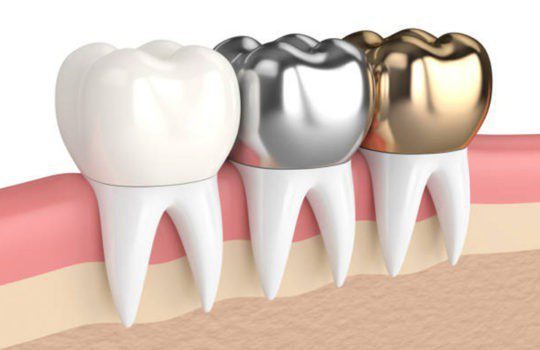
Strength – Ceramic teeth and SAP teeth used to replace congenitally missing teeth. This is an indication of their strength and ability to withstand daily wear and tear. Which means they exert more stress and load on bone than compared to polymer teeth.
Color – Ceramic teeth are available in a variety of natural shades to closely match the colour of natural teeth. SAPTeeth, on the other hand, customised to fit the desired shade.
Cost – Ceramic teeth are usually more expensive than SAPTeeth. This is because ceramic teeth are fired at high temperatures and require a lot of manual labor. Also the time taken to make them is more than 30 hours where as SAPTeeth crown can be custom fabricated in 15 minutes!
Replace old Ceramic with SAPTeeth?
We’ve explored the similarities and differences between both dental crowns, and now we’re going to take a closer look at the factors that make SAPTeeth successful!
A dental bridge is an excellent option for many people who have lost teeth. It allows you to have a stable, implantable attachment for your teeth. The prosthodontist can usually place implants without removing existing teeth as long as you aren’t allergic to metal. The implants are usually stable and won’t come out like a bridge attached to teeth would. Sometimes a dental bridge is not worth it when there are other reasons for the missing teeth.
Conclusion
Now that we’ve explored the differences between ceramic and SAP teeth, it’s important to note that the best restorative solution for a patient is determined by several factors. The condition and health of the patient’s mouth, the type of tooth that needs to be replaced, and the patient’s financial situation are just a few of the factors that go into making a decision. With so many restorative options available, it’s important to do your research and understand the differences between the various restorative solutions. By reading this article, you now know what sets ceramic teeth vs SAP teeth apart.
FAQs
1. What is the difference between ceramic teeth and SAPTeeth?
Ceramic teeth are made from hard ceramic or porcelain-based materials and are commonly used for crowns, bridges, and restorations. SAPTeeth are shock-absorbable permanent teeth made from advanced polymers, designed to reduce stress on the implant, bone, gums, and natural teeth.
2. Are SAPTeeth better than ceramic teeth?
SAPTeeth may be suitable for patients who need lightweight, shock-absorbable, and repair-friendly restorations, especially in implant cases. Ceramic teeth may be preferred in selected cases for strength and appearance, but the best option depends on the patient’s bite, bone support, implant condition, and treatment plan.
3. Are ceramic teeth too hard for dental implants?
Ceramic, porcelain, and zirconia teeth are harder than natural teeth and may transfer more chewing force to the implant or supporting bone. This is why the dentist must check bite pressure, bone condition, implant stability, and opposite teeth before choosing the material.
4. Can SAPTeeth be used for dental implants?
Yes, SAPTeeth can be used as crowns, bridges, or fixed teeth over dental implants in suitable cases. They are designed to support function, appearance, and chewing comfort while helping reduce excessive load on the underlying structures.
5. Which option looks more natural: ceramic teeth or SAPTeeth?
Both ceramic teeth and SAPTeeth can be designed to look natural when planned properly. The final appearance depends on shade selection, smile design, tooth shape, gum condition, bite, and the skill of the dental team.
6. How do I know whether ceramic teeth or SAPTeeth are right for me?
A dental consultation is needed to check your missing teeth, implant condition, bite force, gum health, bone support, smile expectations, and budget. After evaluation, the dentist can suggest whether ceramic teeth, SAPTeeth, or another restoration is more suitable for your case.