The benefits of Dental bridges are that they can be used as a replacement for missing teeth. These restorations come in various shapes and sizes, and to replace one or more teeth. Implants can also serve as a dental bridge. A dental bridge is a restoration that replaces one or more missing teeth. It semi-permanent treatment that meant to last for a few years. Should you have one or more teeth missing, you should think about getting a dental bridge. Here’s everything you should know about them!
What is a dental bridge?
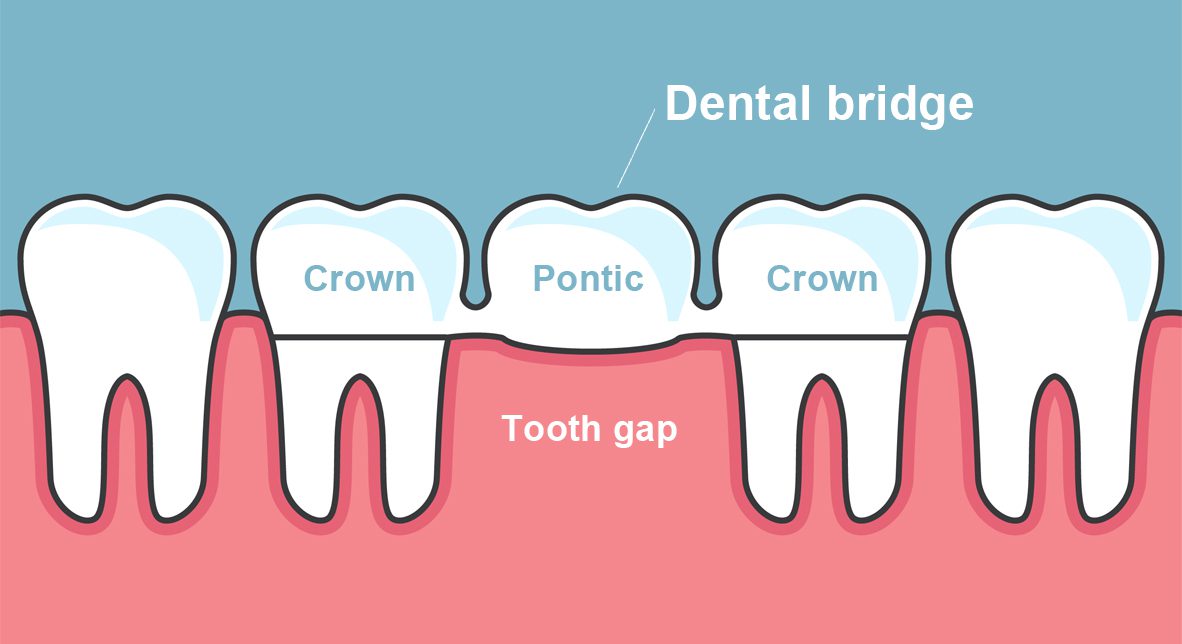
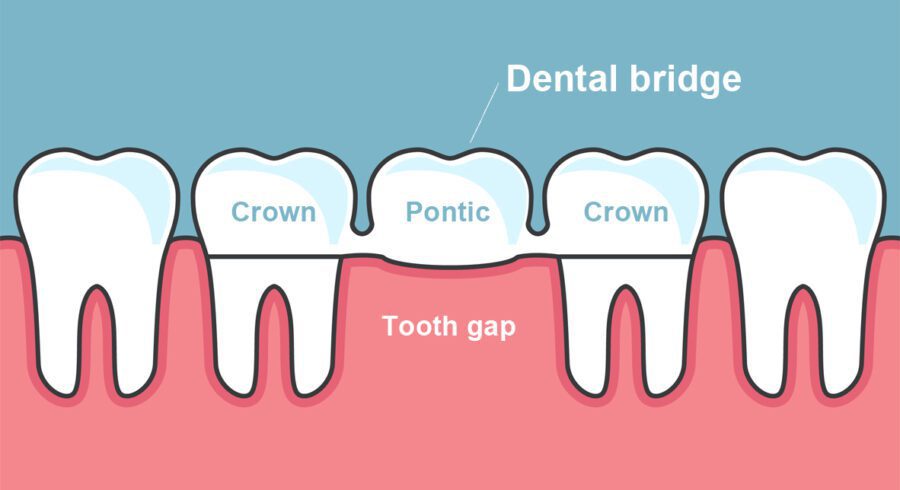
A dental bridge is a fixed dental replacement used to fill the gap created by one or more missing teeth. It may take support from natural teeth or dental implants. The artificial tooth in the gap is designed to restore chewing, speech and smile appearance.
Dental bridges can restore missing teeth, improve chewing comfort, support speech, prevent nearby teeth from drifting, maintain smile appearance and provide a fixed option for patients who do not want a removable denture.
When is a bridge better than an implant?
A bridge may be suitable when the neighbouring teeth already need crowns, when the patient does not want surgery, when implant bone support is limited, or when treatment needs to be completed faster. However, if adjacent teeth are healthy, an implant may sometimes be more conservative.
At Royal Dental Clinics, dental bridges are planned after checking the missing tooth area, support teeth, gum health, X-rays, bite and smile design. Options may include PFM, ceramic, zirconia, SAPTeeth or implant-supported bridges depending on the case.
What are Dental Bridges used for?
They are used as a replacement for missing teeth. These restorations come in various shapes and sizes, and are used to replace one or more teeth. Implants can also serve as a dental bridge. Bridge is a restoration that replaces one or more missing teeth. It semi-permanent treatment that meant to last for a few years. Should you have one or more teeth missing, you should think about getting a dental pontic. These act as replacement for missing teeth. These restorations various shapes and sizes, and to replace one or more teeth.
Dental Implants for missing teeth
Most implants used for repairing missing teeth and/or replacing one or more teeth. The implant attached to the adjacent teeth (usually in the same arch). The implant provides a rich surface for the attachment of other teeth, thereby creating the illusion of two teeth. Dental-bridges are similar to crowns and pontics. Both replace teeth that lost due to accident, gum disease, or tooth decay.
A dental bridge is a type of restorative dental work that connects two teeth by using an artificial tooth, another tooth root, or a bone graft. The teeth connected either with a crown or Pontic. A bridge made of metal, wood, or other materials. A bridge used to replace one or more missing teeth. It’s a semi-permanent way of replacing teeth, and it’s often used for people who have multiple teeth missing.
The benefits of Dental Bridges
There are many advantages to these, and we’ll discuss some of them below. If teeth missing and are thinking about getting a bridge, you should know what to expect!
Looks Natural: As we’ve said above, a bridge to replace one or more missing teeth and act as a connector. And because of this, dental bridges look completely natural. You can wear them in almost any occasion and get away with an impression of your smile.
No Pain: One of the greatest benefits of pontics is that they’re non-invasive. This means you won’t have to go under a general aesthetic, with no pain at all.
Fewer Appointments: Another great advantage of dental bridges is that you’ll have to go for fewer dental appointments. You’ll only have to come for regular cleanings, check-ups, and x-rays.
No Fear of Infection: Another great benefit of dental bridges is that you won’t have to worry about infection. Since implants usually made from metal, they won’t let bacteria or germs in. So you can feel confident in wearing your bridge without worrying about an infection.
Easy to Maintain: The last but not the least benefit of dental bridges is that they are easy to maintain. This because they’re removable, and you can simply get them replaced if they break or decay.
Dental Bridges Disadvantages
There are also some disadvantages that you need to know about. Let’s check them out below.
- Risk of Gum Inflammation: Another disadvantage of dental bridges is that they come with a small risk of gum inflammation. This they are usually made from metal. And metal is known to cause inflammation of the gum tissues.
- Cost: One of the most expensive aspects of dental bridges is that they come with a higher price tag. This is because implant dentistry is still a relatively new field, therefore, the cost is high.
- Dislikes Change: Another disadvantage of dental pontics is that they can be a bit difficult to change over time. This the implants usually made from metal. And metal to cause a little pain when you remove them.
Dental Clinic in Mumbai, Dr Chirag Chamria
Bridges cost less than implants! A dental-bridge does not require as much precision and is not as invasive to put in place, which means it costs less than a dental implant. Cost is one of the major reasons some patients choose bridges over implants. No bone grafting is necessary.
FAQs
What are the main benefits of dental bridges?
Dental bridges replace missing teeth, improve chewing, restore smile appearance, support speech and help maintain tooth position.
Are dental bridges fixed?
Yes. Most dental bridges are fixed and are cemented or screwed onto natural teeth or implants.
Is a bridge better than an implant?
Not always. A bridge may be better in some cases, while an implant may be better when neighbouring teeth are healthy and bone support is adequate.
How long do dental bridges last?
The life of a bridge depends on material, support teeth, gum health, bite, hygiene and regular dental check-ups.
Can a dental bridge be replaced?
Yes. An old or damaged dental bridge can often be replaced after checking the support teeth and gums.